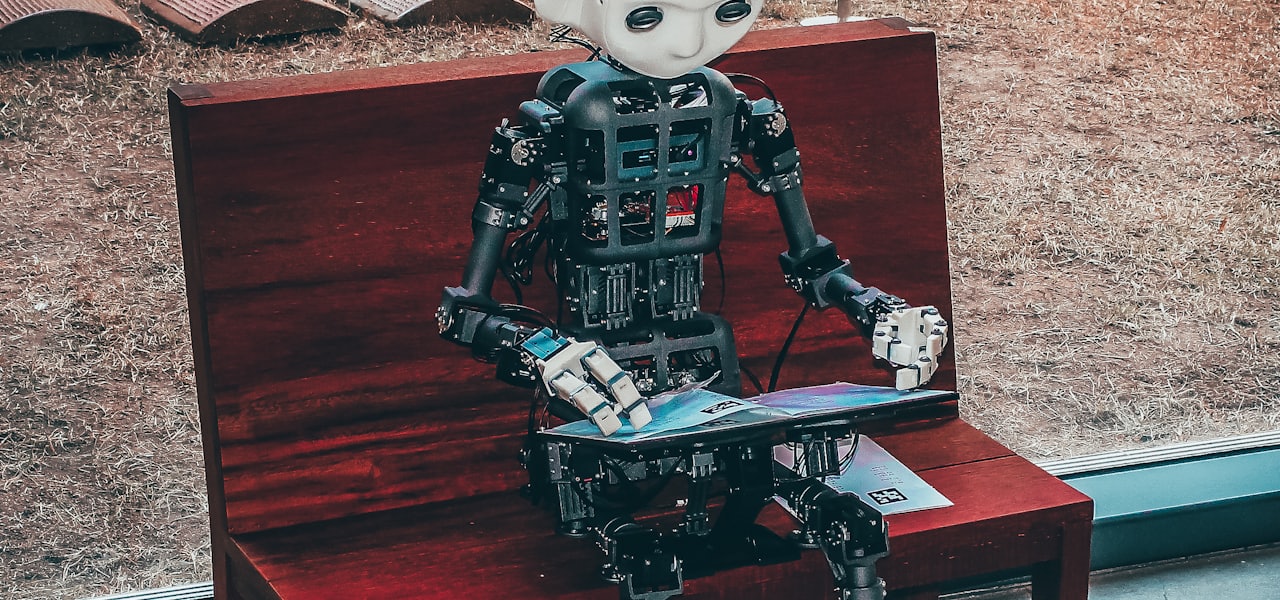
In machine learning and deep learning, compute is the amount of computing power or computational resources required to train machine learning models and large language models. More broadly, compute is the computational power or resources necessary for a computer or computer program to function. == Definition == Compute is commonly defined as the amount of computing power or computational resources required to train machine learning and large language models. The term "compute" has also been more broadly applied to cloud computing, referencing processing power, memory, networking, storage, and other resources required for the computation of any program. Compute is measured in petaflop/s-days and is used to document AI training. A petaflop/s-day (pfs-day) consists of performing 1015 neural net operations per second for one day, or a total of about 1020 operations. The compute-time product serves as a mental convenience, similar to kilowatt-hour for energy. An amount of compute is meant to give an idea of the number of actual operations performed. == History == In a 2018 analysis titled "AI and compute", artificial intelligence company OpenAI introduced the concept of compute. OpenAI identified two eras of training AI systems in terms of compute-usage. From 1959 to 2012, compute roughly followed Moore’s law. Between 2012 and 2018, the amount of compute used in the largest AI training runs increased exponentially, growing by more than 300,000 times — roughly doubling every 3.4 months. By comparison, Moore’s Law doubled every two years over the same period. One of the largest models, released in 2020, used 600,000 times more computing power than the 2012 model. After 2020, compute growth began to slow down, with the compute needed for the largest AI models continuing to slow down in 2023. The notion of compute has become increasingly used from the mid-2020s onwards. == Compute growth and AI progress == Larger AI models trained on more data and using more computational resources, tend to perform better. This happens even if the algorithms themselves remain unchanged. As early as 2018, OpenAI noted the exponential increase in compute to be have a key role in AI progress. OpenAI considers three factors drive the advance of AI: algorithmic innovation, data, and the amount of compute available for training. AI models with more compute not only improve in the tasks they were trained on but can develop emergent abilities. Incremental improvements can lead to more abrupt leaps in capabilities. AI provider SpaceXAI said in 2026 that their AI progress is driven by compute and used it a key metric in the AI training of its supercomputer Colossus, the which contains 1 million GPUs. Anthropic has a contract of $1.25 billion per month with SpaceXAI to buy all the compute capacity at Colossus 1 data center. === Criticism and policy === Increasing, promoting or constraining progress in artificial intelligence has often be done via controlling the amount of compute. Policymarkers have enacted policies and provided support to make compute resources more accessible to domestic AI researchers. In a January 2022 report, the Center for Security and Emerging Technology (CSET) suggested to institutions that increasingly powerful and generalizable AI (AGI) will likely require other strategies than maximizing compute. Some AI researchers are also concerned that government might exclusively focus on scaling compute instead of other strategies. The CSET has reported on the various bottlenecks which could explain why deep learning needs for compute have slow down: training is expensive and training extremely large models generates traffic jams across many processors that are difficult to manage. there is a limited supply of AI chips (see AI chip memory shortage). CSET advances that the main resource is human capital, specifically talented researchers — according to a 2023 published survey of more than 400 AI researchers, academic and private sector workers. The survey found that AI researchers are not primarily or exclusively constrained by compute access. However, both academic and industry AI researchers equally report concerns that insufficient compute could prevent them from contributing meaningfully to AI research in the future. High compute users are more concerned about compute access. When asked about which resource provided by the government would be the most useful to them, some AI researchers select compute, other prefer grant funding. For this goal, CSET advised policymakers to ensure that even researchers with smaller budgets could effectively contribute to AI research. Other proposed strategies include using contemporary AI algorithms, managing modern AI infrastructure or focusing on interdisciplinary work between the AI field and other fields of computer science. A 2024 study on compute access found that academic-only AI research teams often have less compute intensive research topics, especially foundation models, compared to industry AI labs. As a consequence, academia is likely to play a smaller role in advancing such techniques. The researchers suggest nationally-sponsored computing infrastructure as well as open science initiatives to boost academic compute access. === Data === A 2022 study found that current large language models are significantly under-trained, a consequence of focusing on scaling language models whilst keeping the amount of training data constant. By training over 400 language models of various parameter and token size, they found that "for compute-optimal training", the model size and the number of training tokens should ideally be scaled equally: for every doubling of model size the number of training tokens should also be doubled.
Foreign key
A foreign key is a set of attributes in a table that refers to the primary key of another table, linking these two tables. In the context of relational databases, a foreign key is subject to an inclusion dependency constraint that the tuples consisting of the foreign key attributes in one relation, R, must also exist in some other (not necessarily distinct) relation, S; furthermore that those attributes must also be a candidate key in S. In other words, a foreign key is a set of attributes that references a candidate key. For example, a table called TEAM may have an attribute, MEMBER_NAME, which is a foreign key referencing a candidate key, PERSON_NAME, in the PERSON table. Since MEMBER_NAME is a foreign key, any value existing as the name of a member in TEAM must also exist as a person's name in the PERSON table; in other words, every member of a TEAM is also a PERSON. == Summary == The table containing the foreign key is called the child table, and the table containing the candidate key is called the referenced or parent table. In database relational modeling and implementation, a candidate key is a set of zero or more attributes, the values of which are guaranteed to be unique for each tuple (row) in a relation. The value or combination of values of candidate key attributes for any tuple cannot be duplicated for any other tuple in that relation. Since the purpose of the foreign key is to identify a particular row of referenced table, it is generally required that the foreign key is equal to the candidate key in some row of the primary table, or else have no value (the NULL value.). This rule is called a referential integrity constraint between the two tables. Because violations of these constraints can be the source of many database problems, most database management systems provide mechanisms to ensure that every non-null foreign key corresponds to a row of the referenced table. For example, consider a database with two tables: a CUSTOMER table that includes all customer data and an ORDER table that includes all customer orders. Suppose the business requires that each order must refer to a single customer. To reflect this in the database, a foreign key column is added to the ORDER table (e.g., CUSTOMERID), which references the primary key of CUSTOMER (e.g. ID). Because the primary key of a table must be unique, and because CUSTOMERID only contains values from that primary key field, we may assume that, when it has a value, CUSTOMERID will identify the particular customer which placed the order. However, this can no longer be assumed if the ORDER table is not kept up to date when rows of the CUSTOMER table are deleted or the ID column altered, and working with these tables may become more difficult. Many real world databases work around this problem by 'inactivating' rather than physically deleting master table foreign keys, or by complex update programs that modify all references to a foreign key when a change is needed. Foreign keys play an essential role in database design. One important part of database design is making sure that relationships between real-world entities are reflected in the database by references, using foreign keys to refer from one table to another. Another important part of database design is database normalization, in which tables are broken apart and foreign keys make it possible for them to be reconstructed. Multiple rows in the referencing (or child) table may refer to the same row in the referenced (or parent) table. In this case, the relationship between the two tables is called a one to many relationship between the referencing table and the referenced table. In addition, the child and parent table may, in fact, be the same table, i.e. the foreign key refers back to the same table. Such a foreign key is known in SQL:2003 as a self-referencing or recursive foreign key. In database management systems, this is often accomplished by linking a first and second reference to the same table. A table may have multiple foreign keys, and each foreign key can have a different parent table. Each foreign key is enforced independently by the database system. Therefore, cascading relationships between tables can be established using foreign keys. A foreign key is defined as an attribute or set of attributes in a relation whose values match a primary key in another relation. The syntax to add such a constraint to an existing table is defined in SQL:2003 as shown below. Omitting the column list in the REFERENCES clause implies that the foreign key shall reference the primary key of the referenced table. Likewise, foreign keys can be defined as part of the CREATE TABLE SQL statement. If the foreign key is a single column only, the column can be marked as such using the following syntax: Foreign keys can be defined with a stored procedure statement. child_table: the name of the table or view that contains the foreign key to be defined. parent_table: the name of the table or view that has the primary key to which the foreign key applies. The primary key must already be defined. col3 and col4: the name of the columns that make up the foreign key. The foreign key must have at least one column and at most eight columns. == Referential actions == Because the database management system enforces referential constraints, it must ensure data integrity if rows in a referenced table are to be deleted (or updated). If dependent rows in referencing tables still exist, those references have to be considered. SQL:2003 specifies 5 different referential actions that shall take place in such occurrences: CASCADE RESTRICT NO ACTION SET NULL SET DEFAULT === CASCADE === Whenever rows in the parent (referenced) table are deleted (or updated), the respective rows of the child (referencing) table with a matching foreign key column will be deleted (or updated) as well. This is called a cascade delete (or update). === RESTRICT === A value cannot be updated or deleted when a row exists in a referencing or child table that references the value in the referenced table. Similarly, a row cannot be deleted as long as there is a reference to it from a referencing or child table. To understand RESTRICT (and CASCADE) better, it may be helpful to notice the following difference, which might not be immediately clear. The referential action CASCADE modifies the "behavior" of the (child) table itself where the word CASCADE is used. For example, ON DELETE CASCADE effectively says "When the referenced row is deleted from the other table (master table), then delete also from me". However, the referential action RESTRICT modifies the "behavior" of the master table, not the child table, although the word RESTRICT appears in the child table and not in the master table! So, ON DELETE RESTRICT effectively says: "When someone tries to delete the row from the other table (master table), prevent deletion from that other table (and of course, also don't delete from me, but that's not the main point here)." RESTRICT is not supported by Microsoft SQL 2012 and earlier. === NO ACTION === NO ACTION and RESTRICT are very much alike. The main difference between NO ACTION and RESTRICT is that with NO ACTION the referential integrity check is done after trying to alter the table. RESTRICT does the check before trying to execute the UPDATE or DELETE statement. Both referential actions act the same if the referential integrity check fails: the UPDATE or DELETE statement will result in an error. In other words, when an UPDATE or DELETE statement is executed on the referenced table using the referential action NO ACTION, the DBMS verifies at the end of the statement execution that none of the referential relationships are violated. This is different from RESTRICT, which assumes at the outset that the operation will violate the constraint. Using NO ACTION, the triggers or the semantics of the statement itself may yield an end state in which no foreign key relationships are violated by the time the constraint is finally checked, thus allowing the statement to complete successfully. === SET NULL, SET DEFAULT === In general, the action taken by the DBMS for SET NULL or SET DEFAULT is the same for both ON DELETE or ON UPDATE: the value of the affected referencing attributes is changed to NULL for SET NULL, and to the specified default value for SET DEFAULT. === Triggers === Referential actions are generally implemented as implied triggers (i.e. triggers with system-generated names, often hidden.) As such, they are subject to the same limitations as user-defined triggers, and their order of execution relative to other triggers may need to be considered; in some cases it may become necessary to replace the referential action with its equivalent user-defined trigger to ensure proper execution order, or to work around mutating-table limitations. Another important limitation appears with transaction isolation: your changes to a row may not be able to fully cascade because the row is ref
MY F.C.
MY F.C. is a freemium app designed to organise and administer football teams. It is developed by MY F.C. Limited, a private company headquartered in Auckland, New Zealand. The app allows users to build a team by adding players and from there they can create trainings and matches, keep up with relevant news in the curated newsfeed, record statistics both individually and team based, follow the games live in the match-centre. The app also features integrated lineup builder with custom team kits. == History == Founders Sam Jenkins, Mike Simpson and Sam Jasper started MY F.C. in 2015 to help them "run their football lives". The app was launched on Android and iOS on 14 February 2017. == Accolades == MY F.C. won the first place prize at Bank of New Zealand Start-up Alley 2017 competition that aims to discover New Zealand start-ups who are doing innovative work and ready to establish themselves as long-term, sustainable businesses. The prize package included $15,000 and a trip to San Francisco.
Kinematic chain
In mechanical engineering, a kinematic chain is an assembly of rigid bodies connected by joints to provide constrained motion that is the mathematical model for a mechanical system. As the word chain suggests, the rigid bodies, or links, are constrained by their connections to other links. An example is the simple open chain formed by links connected in series, like the usual chain, which is the kinematic model for a typical robot manipulator. Mathematical models of the connections, or joints, between two links are termed kinematic pairs. Kinematic pairs model the hinged and sliding joints fundamental to robotics, often called lower pairs and the surface contact joints critical to cams and gearing, called higher pairs. These joints are generally modeled as holonomic constraints. A kinematic diagram is a schematic of the mechanical system that shows the kinematic chain. The modern use of kinematic chains includes analysis of Linkages (mechanical), compliance that arises from flexure joints in precision mechanisms, link compliance in compliant mechanisms and micro-electro-mechanical systems, and cable compliance in cable robotic and tensegrity systems. == Mobility formula == The degrees of freedom, or mobility, of a kinematic chain is the number of parameters that define the configuration of the chain. A system of n rigid bodies moving in space has 6n degrees of freedom measured relative to a fixed frame. This frame is included in the count of bodies, so that mobility does not depend on link that forms the fixed frame. This means the degree-of-freedom of this system is M = 6(N − 1), where N = n + 1 is the number of moving bodies plus the fixed body. Joints that connect bodies impose constraints. Specifically, hinges and sliders each impose five constraints and therefore remove five degrees of freedom. It is convenient to define the number of constraints c that a joint imposes in terms of the joint's freedom f, where c = 6 − f. In the case of a hinge or slider, which are one-degree-of-freedom joints, have f = 1 and therefore c = 6 − 1 = 5. The result in general where d {\displaystyle d} is the degrees of freedom for the mobility of a kinematic chain formed from n moving links and j joints each with freedom fi, i = 1, 2, …, j, is given by M = d n − ∑ i = 1 j ( d − f i ) = d ( N − 1 − j ) + ∑ i = 1 j f i {\displaystyle M=dn-\sum _{i=1}^{j}(d-f_{i})=d(N-1-j)+\sum _{i=1}^{j}f_{i}} Where N is the total number of links and includes the fixed link. Spacial linkages used d = 6 {\displaystyle d=6} and planar linkages use d = 3 {\displaystyle d=3} . This result is known as the Chebychev–Grübler–Kutzbach criterion. == Analysis of kinematic chains == The constraint equations of a kinematic chain couple the range of movement allowed at each joint to the dimensions of the links in the chain, and form algebraic equations that are solved to determine the configuration of the chain associated with specific values of input parameters, called degrees of freedom. The constraint equations for a kinematic chain are obtained using rigid transformations [Z] to characterize the relative movement allowed at each joint and separate rigid transformations [X] to define the dimensions of each link. In the case of a serial open chain, the result is a sequence of rigid transformations alternating joint and link transformations from the base of the chain to its end link, which is equated to the specified position for the end link. A chain of n links connected in series has the kinematic equations, [ T ] = [ Z 1 ] [ X 1 ] [ Z 2 ] [ X 2 ] ⋯ [ X n − 1 ] [ Z n ] , {\displaystyle [T]=[Z_{1}][X_{1}][Z_{2}][X_{2}]\cdots [X_{n-1}][Z_{n}],\!} where [T] is the transformation locating the end-link—notice that the chain includes a "zeroth" link consisting of the ground frame to which it is attached. These equations are called the forward kinematics equations of the serial chain. Kinematic chains of a wide range of complexity are analyzed by equating the kinematics equations of serial chains that form loops within the kinematic chain. These equations are often called loop equations. The complexity (in terms of calculating the forward and inverse kinematics) of the chain is determined by the following factors: Its topology: a serial chain, a parallel manipulator, a tree structure, or a graph. Its geometrical form: how are neighbouring joints spatially connected to each other? Explanation Two or more rigid bodies in space are collectively called a rigid body system. We can hinder the motion of these independent rigid bodies with kinematic constraints. Kinematic constraints are constraints between rigid bodies that result in the decrease of the degrees of freedom of rigid body system. == Synthesis of kinematic chains == The constraint equations of a kinematic chain can be used in reverse to determine the dimensions of the links from a specification of the desired movement of the system. This is termed kinematic synthesis. Perhaps the most developed formulation of kinematic synthesis is for four-bar linkages, which is known as Burmester theory. Ferdinand Freudenstein is often called the father of modern kinematics for his contributions to the kinematic synthesis of linkages beginning in the 1950s. His use of the newly developed computer to solve Freudenstein's equation became the prototype of computer-aided design systems. This work has been generalized to the synthesis of spherical and spatial mechanisms.
Mooky (app)
Mooky was a location-based social and dating application, designed to help its users to find the perfect match by providing a large scale of filters. Mooky was free of charge. The app made use of mobile devices' geolocation, a feature of smart phones and other devices which allows users to locate other users who are nearby. == History == Mooky was published on Google Play on April 17, 2016, by Mooky BV. The latest version of this application was version 1.0.6. == Overview == === How it works === Mooky used Facebook to build a user profile with photos and basic information, like the user's surname and age. From there on the user had to fill in their Mooky profile, which contains information about the user's height, posture, hair color, eye color, ethnicity and religion. After this the user could select its preferences to find matches nearby. === User verification === Mooky asked their users to take a selfie holding a piece of paper saying 'Mooky'. Mooky would then manually accept or decline the user verification.
Eugene Goostman
Eugene Goostman is a chatbot that some regard as having passed the Turing test, a test of a computer's ability to communicate indistinguishably from a human. Developed in Saint Petersburg in 2001 by a group of three programmers, the Russian-born Vladimir Veselov, Ukrainian-born Eugene Demchenko, and Russian-born Sergey Ulasen, Goostman is portrayed as a 13-year-old Ukrainian boy—characteristics that are intended to induce forgiveness in those with whom it interacts for its grammatical errors and lack of general knowledge. The Goostman bot has competed in a number of Turing test contests since its creation, and finished second in the 2005 and 2008 Loebner Prize contest. In June 2012, at an event marking what would have been the 100th birthday of the test's author, Alan Turing, Goostman won a competition promoted as the largest-ever Turing test contest, in which it successfully convinced 29% of its judges that it was human. On 7 June 2014, at a contest marking the 60th anniversary of Turing's death, 33% of the event's judges thought that Goostman was human; the event's organiser Kevin Warwick considered it to have passed Turing's test as a result, per Turing's prediction in his 1950 paper "Computing Machinery and Intelligence", that by the year 2000, machines would be capable of fooling 30% of human judges after five minutes of questioning. The validity and relevance of the announcement of Goostman's pass was questioned by critics, who noted the exaggeration of the achievement by Warwick, the bot's use of personality quirks and humour in an attempt to misdirect users from its non-human tendencies and lack of real intelligence, along with "passes" achieved by other chatbots at similar events. == Personality == Eugene Goostman is portrayed as being a 13-year-old boy from Odesa, Ukraine, who has a pet guinea pig and a father who is a gynaecologist. Veselov stated that Goostman was designed to be a "character with a believable personality". The choice of age was intentional, as, in Veselov's opinion, a thirteen-year-old is "not too old to know everything and not too young to know nothing". Goostman's young age also induces people who "converse" with him to forgive minor grammatical errors in his responses. In 2014, work was made on improving the bot's "dialog controller", allowing Goostman to output more human-like dialogue. A conversation between Scott Aaronson and Eugene Goostman ran as follows: == Competitions == Eugene Goostman has competed in a number of Turing test competitions, including the Loebner Prize contest; it finished joint second in the Loebner test in 2001, and came second to Jabberwacky in 2005 and to Elbot in 2008. On 23 June 2012, Goostman won a Turing test competition at Bletchley Park in Milton Keynes, held to mark the centenary of its namesake, Alan Turing. The competition, which featured five bots, twenty-five hidden humans, and thirty judges, was considered to be the largest-ever Turing test contest by its organizers. After a series of five-minute-long text conversations, 29% of the judges were convinced that the bot was an actual human. === 2014 "pass" === On 7 June 2014, in a Turing test competition at the Royal Society, organised by Kevin Warwick of the University of Reading to mark the 60th anniversary of Turing's death, Goostman won after 33% of the judges were convinced that the bot was human. 30 judges took part in the event, which included Lord Sharkey, a sponsor of Turing's posthumous pardon, artificial intelligence Professor Aaron Sloman, Fellow of the Royal Society Mark Pagel and Red Dwarf actor Robert Llewellyn. Each judge partook in a textual conversation with each of the five bots; at the same time, they also conversed with a human. In all, a total of 300 conversations were conducted. In Warwick's view, this made Goostman the first machine to pass a Turing test. In a press release, he added that: Some will claim that the Test has already been passed. The words Turing Test have been applied to similar competitions around the world. However this event involved more simultaneous comparison tests than ever before, was independently verified and, crucially, the conversations were unrestricted. A true Turing Test does not set the questions or topics prior to the conversations. In his 1950 paper "Computing Machinery and Intelligence", Turing predicted that by the year 2000, computer programs would be sufficiently advanced that the average interrogator would, after five minutes of questioning, "not have more than 70 per cent chance" of correctly guessing whether they were speaking to a human or a machine. Although Turing phrased this as a prediction rather than a "threshold for intelligence", commentators believe that Warwick had chosen to interpret it as meaning that if 30% of interrogators were fooled, the software had "passed the Turing test". ==== Reactions ==== Warwick's claim that Eugene Goostman was the first ever chatbot to pass a Turing test was met with scepticism; critics acknowledged similar "passes" made in the past by other chatbots under the 30% criteria, including PC Therapist in 1991 (which tricked 5 of 10 judges, 50%), and at the Techniche festival in 2011, where a modified version of Cleverbot tricked 59.3% of 1334 votes (which included the 30 judges, along with an audience). Cleverbot's developer, Rollo Carpenter, argued that Turing tests can only prove that a machine can "imitate" intelligence rather than show actual intelligence. Gary Marcus was critical of Warwick's claims, arguing that Goostman's "success" was only the result of a "cleverly-coded piece of software", going on to say that "it's easy to see how an untrained judge might mistake wit for reality, but once you have an understanding of how this sort of system works, the constant misdirection and deflection becomes obvious, even irritating. The illusion, in other words, is fleeting." While acknowledging IBM's Deep Blue and Watson projects—single-purpose computer systems meant for playing chess and the quiz show Jeopardy! respectively—as examples of computer systems that show a degree of intelligence in their specialised field, he further argued that they were not an equivalent to a computer system that shows "broad" intelligence, and could—for example, watch a television programme and answer questions on its content. Marcus stated that "no existing combination of hardware and software can learn completely new things at will the way a clever child can." However, he still believed that there were potential uses for technology such as that of Goostman, specifically suggesting the creation of "believable", interactive video game characters. Imperial College London professor Murray Shanahan questioned the validity and scientific basis of the test, stating that it was "completely misplaced, and it devalues real AI research. It makes it seem like science fiction AI is nearly here, when in fact it's not and it's incredibly difficult." Mike Masnick, editor of the blog Techdirt, was also skeptical, questioning publicity blunders such as the five chatbots being referred to in press releases as "supercomputers", and saying that "creating a chatbot that can fool humans is not really the same thing as creating artificial intelligence."
Security type system
In computer science, a type system can be described as a syntactic framework which contains a set of rules that are used to assign a type property (int, boolean, char etc.) to various components of a computer program, such as variables or functions. A security type system works in a similar way, only with a main focus on the security of the computer program, through information flow control. Thus, the various components of the program are assigned security types, or labels. The aim of a such system is to ultimately be able to verify that a given program conforms to the type system rules and satisfies non-interference. Security type systems is one of many security techniques used in the field of language-based security, and is tightly connected to information flow and information flow policies. In simple terms, a security type system can be used to detect if there exists any kind of violation of confidentiality or integrity in a program, i.e. the programmer wants to detect if the program is in line with the information flow policy or not. == A simple information flow policy == Suppose there are two users, A and B. In a program, the following security classes (SC) are introduced: SC = {∅, {A}, {B}, {A,B}}, where ∅ is the empty set. The information flow policy should define the direction that information is allowed to flow, which is dependent on whether the policy allows read or write operations. This example considers read operations (confidentiality). The following flows are allowed: → = {({A}, {A}), ({B}, {B}), ({A,B}, {A,B}), ({A,B}, {A}), ({A,B}, {B}), ({A}, ∅), ({B}, ∅), ({A,B}, ∅)} This can also be described as a superset (⊇). In words: information is allowed to flow towards stricter levels of confidentiality. The combination operator (⊕) can express how security classes can perform read operations with respect to other security classes. For example: {A} ⊕ {A,B} = {A} — the only security class that can read from both {A} and {A,B} is {A}. {A} ⊕ {B} = ∅ — neither {A} nor {B} are allowed to read from both {A} and {B}. This can also be described as an intersection (∩) between security classes. An information flow policy can be illustrated as a Hasse diagram. The policy should also be a lattice, that is, it has a greatest lower-bound and least upper-bound (there always exists a combination between security classes). In the case of integrity, information will flow in the opposite direction, thus the policy will be inverted. == Information flow policy in security type systems == Once the policy is in place, the software developer can apply the security classes to the program components. Use of a security type system is usually combined with a compiler that can perform the verification of the information flow according to the type system rules. For the sake of simplicity, a very simple computer program, together with the information flow policy as described in the previous section, can be used as a demonstration. The simple program is given in the following pseudocode: if y{A} = 1 then x{A,B} := 0 else x{A,B} := 1 Here, an equality check is made on a variable y that is assigned the security class {A}. A variable x with a lower security class ({A,B}) is influenced by this check. This means that information is leaking from class {A} to class {A,B}, which is a violation of the confidentiality policy. This leak should be detected by the security type system. === Example === Designing a security type system requires a function (also known as a security environment) that creates a mapping from variables to security types, or classes. This function can be called Γ, such that Γ(x) = τ, where x is a variable and τ is the security class, or type. Security classes are assigned (also called "judgement") to program components, using the following notation: Types are assigned to read operations by: Γ ⊢ e : τ. Types are assigned to write operations by: Γ ⊢ S : τ cmd. Constants can be assigned any type. The following bottom-up notation can be used to decompose the program: assumption1 ... assumptionn/conclusion. Once the program is decomposed into trivial judgements, by which the type can easily be determined, the types for the less trivial parts of the program can be derived. Each "numerator" is considered in isolation, looking at the type of each statement to see if an allowed type can be derived for the "denominator", based on the defined type system "rules". ==== Rules ==== The main part of the security type system is the rules. They say how the program should be decomposed and how type verification should be performed. This toy program consists of a conditional test and two possible variable assignments. Rules for these two events are defined as follows: Applying this to the simple program introduced above yields: The type system detects the policy violation in line 2, where a read operation of security class {A} is performed, followed by two write operations of a less strict security class {A,B}. In more formalized terms, {A} ⋢ {A,B}, {A,B} (from the rule of the conditional test). Thus, the program is classified as "not typeable". === Soundness === The soundness of a security type system can be informally defined as: If program P is well typed, P satisfies non-interference. Volpano, Smith and Irvine were the first to prove soundness of a security type system for a deterministic imperative programming language with a standard (non-instrumented) semantics using the notion of non-interference.