In cryptography, the branch number is a numerical value that characterizes the amount of diffusion introduced by a vectorial Boolean function F that maps an input vector a to output vector F ( a ) {\displaystyle F(a)} . For the (usual) case of a linear F the value of the differential branch number is produced by: applying nonzero values of a (i.e., values that have at least one non-zero component of the vector) to the input of F; calculating for each input value a the Hamming weight W {\displaystyle W} (number of nonzero components), and adding weights W ( a ) {\displaystyle W(a)} and W ( F ( a ) ) {\displaystyle W(F(a))} together; selecting the smallest combined weight across for all nonzero input values: B d ( F ) = min a ≠ 0 ( W ( a ) + W ( F ( a ) ) ) {\displaystyle B_{d}(F)={\underset {a\neq 0}{\min }}(W(a)+W(F(a)))} . If both a and F ( a ) {\displaystyle F(a)} have s components, the result is obviously limited on the high side by the value s + 1 {\displaystyle s+1} (this "perfect" result is achieved when any single nonzero component in a makes all components of F ( a ) {\displaystyle F(a)} to be non-zero). A high branch number suggests higher resistance to the differential cryptanalysis: the small variations of input will produce large changes on the output and in order to obtain small variations of the output, large changes of the input value will be required. The term was introduced by Daemen and Rijmen in early 2000s and quickly became a typical tool to assess the diffusion properties of the transformations. == Mathematics == The branch number concept is not limited to the linear transformations, Daemen and Rijmen provided two general metrics: differential branch number, where the minimum is obtained over inputs of F that are constructed by independently sweeping all the values of two nonzero and unequal vectors a, b ( ⊕ {\displaystyle \oplus } is a component-by-component exclusive-or): B d ( F ) = min a ≠ b ( W ( a ⊕ b ) + W ( F ( a ) ⊕ F ( b ) ) {\displaystyle B_{d}(F)={\underset {a\neq b}{\min }}(W(a\oplus b)+W(F(a)\oplus F(b))} ; for linear branch number, the independent candidates α {\displaystyle \alpha } and β {\displaystyle \beta } are independently swept; they should be nonzero and correlated with respect to F (the L A T ( α , β ) {\displaystyle LAT(\alpha ,\beta )} coefficient of the linear approximation table of F should be nonzero): B l ( F ) = min α ≠ 0 , β , L A T ( α , β ) ≠ 0 ( W ( α ) + W ( β ) ) {\displaystyle B_{l}(F)={\underset {\alpha \neq 0,\beta ,LAT(\alpha ,\beta )\neq 0}{\min }}(W(\alpha )+W(\beta ))} .
Tactical NAV
Tactical NAV, also known as TACNAV-X, is a location-based tracking app designed for use by military personnel. The app is primarily designed to assist in pinpointing enemy fire and mapping waypoints. Tactical NAV also helps users efficiently relay critical information to tactical operations centers for prompt decision-making regarding airstrikes or medical evacuations. The TACNAV-X platform is intended to enhance situational awareness, refine navigation capabilities, and assist in tactical decision-making across various operational environments. == Overview == Tactical NAV allows users to pinpoint enemy fire. == History == Tactical NAV was designed by U.S. Army Captain Jonathan J. Springer, a Field Artillery officer serving as a Battalion Fire Support Officer (FSO) in the 101st Airborne Division. Springer conceived the idea for the app during his third tour in Afghanistan in support of Operation Enduring Freedom. On June 25, 2010, after a rocket attack by the Taliban killed two soldiers in his battalion, he was inspired to create an app that would prevent similar losses in the future, enhance situational awareness, and assist soldiers serving on combat deployments. In 2010, Springer founded TacNav Systems (formerly AppDaddy Technologies) to develop mobile applications for use by military personnel. He tested the app during combat operations in eastern Afghanistan and verified TACNAV-X's accuracy using DAGRs, AFATDS, Falcon View, CPOF, ATAK, and other approved Department of Defense (DoD) systems. As of 2012, the app had been downloaded 8,000 times.
Cognitive computing
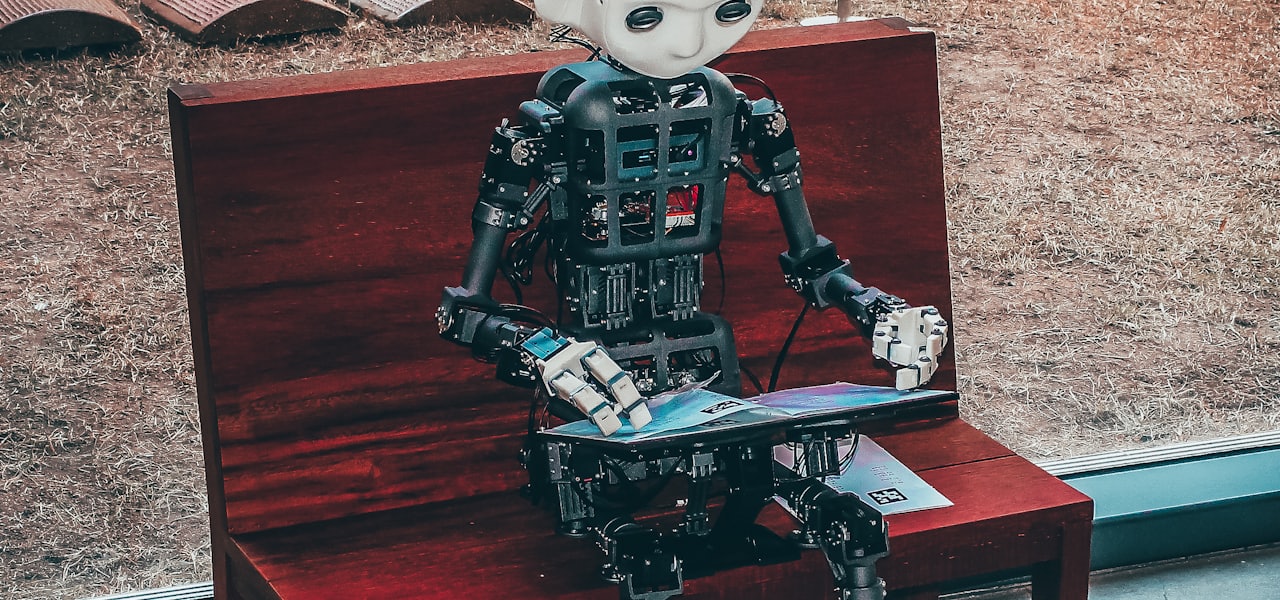
Cognitive computing refers to technology platforms that, broadly speaking, are based on the scientific disciplines of artificial intelligence and signal processing. These platforms encompass machine learning, reasoning, natural language processing, speech recognition and vision (object recognition), human–computer interaction, dialog and narrative generation, among other technologies. == Definition == At present, there is no widely agreed upon definition for cognitive computing in either academia or industry. In general, the term cognitive computing has been used to refer to new hardware and/or software that mimics the functioning of the human brain (2004). In this sense, cognitive computing is a new type of computing with the goal of more accurate models of how the human brain/mind senses, reasons, and responds to stimulus. Cognitive computing applications link data analysis and adaptive page displays (AUI) to adjust content for a particular type of audience. As such, cognitive computing hardware and applications strive to be more affective and more influential by design. The term "cognitive system" also applies to any artificial construct able to perform a cognitive process where a cognitive process is the transformation of data, information, knowledge, or wisdom to a new level in the DIKW Pyramid. While many cognitive systems employ techniques having their origination in artificial intelligence research, cognitive systems, themselves, may not be artificially intelligent. For example, a neural network trained to recognize cancer on an MRI scan may achieve a higher success rate than a human doctor. This system is certainly a cognitive system but is not artificially intelligent. Cognitive systems may be engineered to feed on dynamic data in real-time, or near real-time, and may draw on multiple sources of information, including both structured and unstructured digital information, as well as sensory inputs (visual, gestural, auditory, or sensor-provided). == Cognitive analytics == Cognitive computing-branded technology platforms typically specialize in the processing and analysis of large, unstructured datasets. == Applications == Education Even if cognitive computing can not take the place of teachers, it can still be a heavy driving force in the education of students. Cognitive computing being used in the classroom is applied by essentially having an assistant that is personalized for each individual student. This cognitive assistant can relieve the stress that teachers face while teaching students, while also enhancing the student's learning experience over all. Teachers may not be able to pay each and every student individual attention, this being the place that cognitive computers fill the gap. Some students may need a little more help with a particular subject. For many students, Human interaction between student and teacher can cause anxiety and can be uncomfortable. With the help of Cognitive Computer tutors, students will not have to face their uneasiness and can gain the confidence to learn and do well in the classroom. While a student is in class with their personalized assistant, this assistant can develop various techniques, like creating lesson plans, to tailor and aid the student and their needs. Healthcare Numerous tech companies are in the process of developing technology that involves cognitive computing that can be used in the medical field. The ability to classify and identify is one of the main goals of these cognitive devices. This trait can be very helpful in the study of identifying carcinogens. This cognitive system that can detect would be able to assist the examiner in interpreting countless numbers of documents in a lesser amount of time than if they did not use Cognitive Computer technology. This technology can also evaluate information about the patient, looking through every medical record in depth, searching for indications that can be the source of their problems. Commerce Together with Artificial Intelligence, it has been used in warehouse management systems to collect, store, organize and analyze all related supplier data. All these aims at improving efficiency, enabling faster decision-making, monitoring inventory and fraud detection Human Cognitive Augmentation In situations where humans are using or working collaboratively with cognitive systems, called a human/cog ensemble, results achieved by the ensemble are superior to results obtainable by the human working alone. Therefore, the human is cognitively augmented. In cases where the human/cog ensemble achieves results at, or superior to, the level of a human expert then the ensemble has achieved synthetic expertise. In a human/cog ensemble, the "cog" is a cognitive system employing virtually any kind of cognitive computing technology. Other use cases Speech recognition Sentiment analysis Face detection Risk assessment Fraud detection Behavioral recommendations == Industry work == Cognitive computing in conjunction with big data and algorithms that comprehend customer needs, can be a major advantage in economic decision making. The powers of cognitive computing and artificial intelligence hold the potential to affect almost every task that humans are capable of performing. This can negatively affect employment for humans, as there would be no such need for human labor anymore. It would also increase the inequality of wealth; the people at the head of the cognitive computing industry would grow significantly richer, while workers without ongoing, reliable employment would become less well off. The more industries start to use cognitive computing, the more difficult it will be for humans to compete. Increased use of the technology will also increase the amount of work that AI-driven robots and machines can perform. The influence of competitive individuals in conjunction with artificial intelligence/cognitive computing has the potential to change the course of humankind.
Pythia (machine learning)
Pythia is an ancient text restoration model that recovers missing characters from damaged text input using deep neural networks. It was created by Yannis Assael, Thea Sommerschield, and Jonathan Prag, researchers from Google DeepMind and the University of Oxford. To study the society and the history of ancient civilisations, ancient history relies on disciplines such as epigraphy, the study of ancient inscribed texts. Hundreds of thousands of these texts, known as inscriptions, have survived to our day, but are often damaged over the centuries. Illegible parts of the text must then be restored by specialists, called epigraphists, in order to extract meaningful information from the text and use it to expand our knowledge of the context in which the text was written. Pythia takes as input the damaged text, and is trained to return hypothesised restorations of ancient Greek inscriptions, working as an assistive aid for ancient historians. Its neural network architecture works at both the character- and word-level, thereby effectively handling long-term context information, and dealing efficiently with incomplete word representations. Pythia is applicable to any discipline dealing with ancient texts (philology, papyrology, codicology) and can work in any language (ancient or modern).
ASR-complete
ASR-complete is, by analogy to "NP-completeness" in complexity theory, a term to indicate that the difficulty of a computational problem is equivalent to solving the central automatic speech recognition problem, i.e. recognize and understanding spoken language. Unlike "NP-completeness", this term is typically used informally. Such problems are hypothesised to include: Spoken natural language understanding Understanding speech from far-field microphones, i.e. handling the reverbation and background noise These problems are easy for humans to do (in fact, they are described directly in terms of imitating humans). Some systems can solve very simple restricted versions of these problems, but none can solve them in their full generality.
Blanking (video)
In analog video, blanking occurs between horizontal lines and between frames. In raster scan equipment, an image is built up by scanning an electron beam from left to right across a screen to produce a visible trace of one scan line, reducing the brightness of the beam to zero (horizontal blanking), moving it back as fast as possible to the left of the screen at a slightly lower position (the next scan line), restoring the brightness, and continuing until all the lines have been displayed and the beam is at the bottom right of the screen. Its intensity is then reduced to zero again (vertical blanking), and it is rapidly moved to the top left to start again, creating the next frame. In television, in particular, the vertical blanking interval is long to accommodate the slow equipment available at the time the standard was set. Fast modern electronics allows digital information to be encoded into the signal during the vertical blanking interval; it is not displayed on screen as the beam is blanked, but can be processed by appropriate circuitry.
Compute (machine learning)
In machine learning and deep learning, compute is the amount of computing power or computational resources required to train machine learning models and large language models. More broadly, compute is the computational power or resources necessary for a computer or computer program to function. == Definition == Compute is commonly defined as the amount of computing power or computational resources required to train machine learning and large language models. The term "compute" has also been more broadly applied to cloud computing, referencing processing power, memory, networking, storage, and other resources required for the computation of any program. Compute is measured in petaflop/s-days and is used to document AI training. A petaflop/s-day (pfs-day) consists of performing 1015 neural net operations per second for one day, or a total of about 1020 operations. The compute-time product serves as a mental convenience, similar to kilowatt-hour for energy. An amount of compute is meant to give an idea of the number of actual operations performed. == History == In a 2018 analysis titled "AI and compute", artificial intelligence company OpenAI introduced the concept of compute. OpenAI identified two eras of training AI systems in terms of compute-usage. From 1959 to 2012, compute roughly followed Moore’s law. Between 2012 and 2018, the amount of compute used in the largest AI training runs increased exponentially, growing by more than 300,000 times — roughly doubling every 3.4 months. By comparison, Moore’s Law doubled every two years over the same period. One of the largest models, released in 2020, used 600,000 times more computing power than the 2012 model. After 2020, compute growth began to slow down, with the compute needed for the largest AI models continuing to slow down in 2023. The notion of compute has become increasingly used from the mid-2020s onwards. == Compute growth and AI progress == Larger AI models trained on more data and using more computational resources, tend to perform better. This happens even if the algorithms themselves remain unchanged. As early as 2018, OpenAI noted the exponential increase in compute to be have a key role in AI progress. OpenAI considers three factors drive the advance of AI: algorithmic innovation, data, and the amount of compute available for training. AI models with more compute not only improve in the tasks they were trained on but can develop emergent abilities. Incremental improvements can lead to more abrupt leaps in capabilities. AI provider SpaceXAI said in 2026 that their AI progress is driven by compute and used it a key metric in the AI training of its supercomputer Colossus, the which contains 1 million GPUs. Anthropic has a contract of $1.25 billion per month with SpaceXAI to buy all the compute capacity at Colossus 1 data center. === Criticism and policy === Increasing, promoting or constraining progress in artificial intelligence has often be done via controlling the amount of compute. Policymarkers have enacted policies and provided support to make compute resources more accessible to domestic AI researchers. In a January 2022 report, the Center for Security and Emerging Technology (CSET) suggested to institutions that increasingly powerful and generalizable AI (AGI) will likely require other strategies than maximizing compute. Some AI researchers are also concerned that government might exclusively focus on scaling compute instead of other strategies. The CSET has reported on the various bottlenecks which could explain why deep learning needs for compute have slow down: training is expensive and training extremely large models generates traffic jams across many processors that are difficult to manage. there is a limited supply of AI chips (see AI chip memory shortage). CSET advances that the main resource is human capital, specifically talented researchers — according to a 2023 published survey of more than 400 AI researchers, academic and private sector workers. The survey found that AI researchers are not primarily or exclusively constrained by compute access. However, both academic and industry AI researchers equally report concerns that insufficient compute could prevent them from contributing meaningfully to AI research in the future. High compute users are more concerned about compute access. When asked about which resource provided by the government would be the most useful to them, some AI researchers select compute, other prefer grant funding. For this goal, CSET advised policymakers to ensure that even researchers with smaller budgets could effectively contribute to AI research. Other proposed strategies include using contemporary AI algorithms, managing modern AI infrastructure or focusing on interdisciplinary work between the AI field and other fields of computer science. A 2024 study on compute access found that academic-only AI research teams often have less compute intensive research topics, especially foundation models, compared to industry AI labs. As a consequence, academia is likely to play a smaller role in advancing such techniques. The researchers suggest nationally-sponsored computing infrastructure as well as open science initiatives to boost academic compute access. === Data === A 2022 study found that current large language models are significantly under-trained, a consequence of focusing on scaling language models whilst keeping the amount of training data constant. By training over 400 language models of various parameter and token size, they found that "for compute-optimal training", the model size and the number of training tokens should ideally be scaled equally: for every doubling of model size the number of training tokens should also be doubled.